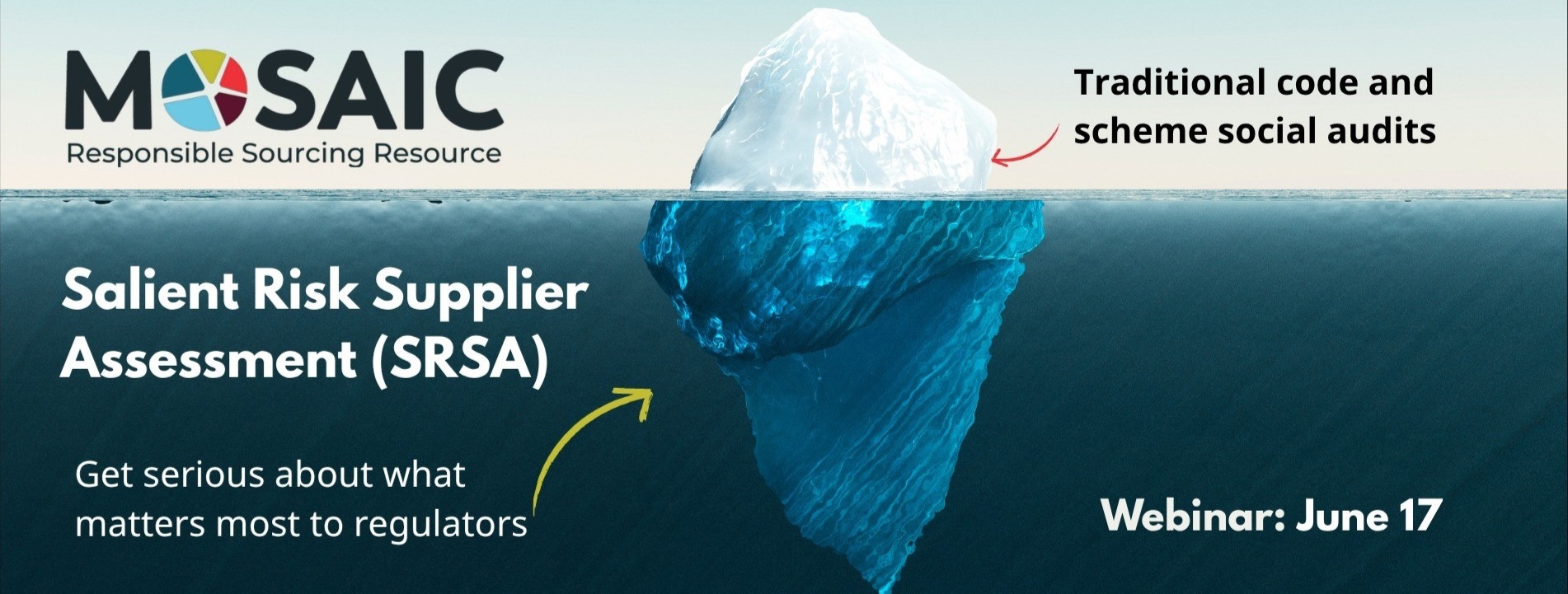
Traditional brand and scheme (i.e. SMETA, BSCI, SLCP, WRAP, etc.) social audits provide efficiency and help reduce audit fatigue, but they often fall short in giving brands (and regulators) confidence that the most serious risks are being identified. The truth is that their broad, standardized checklists, limited onsite time, restrictive reporting guidelines, and lack of independence undermine their effectiveness. This weakness has prompted both widespread criticism and now mandatory Human Rights Due Diligence (HRDD) laws. Legislation that requires companies to demonstrate their ability to identify, prevent, mitigate, and remediate “salient risks” to workers (not brands) using a risk-based approach.
Mosaic’s new Salient Risk Supplier Assessment (SRSA) program is designed for this new reality. It prioritizes independence and depth over breadth, focusing on known salient-risks and applying targeted, investigative techniques proven to find nuanced critical issues; the issues everyone on the ground know are happening, but normal social audits don’t find.
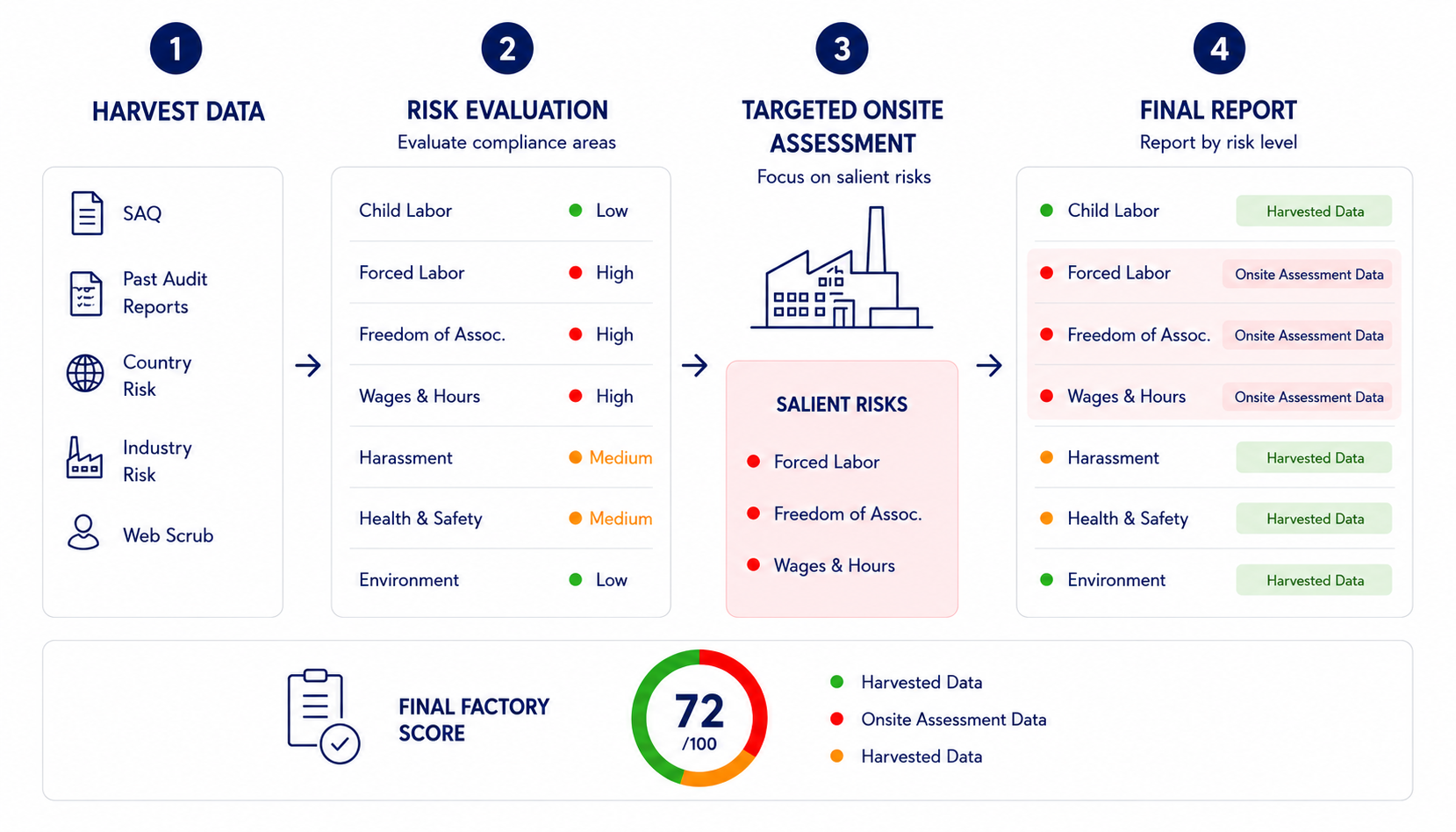
SRSA Deployment Scenarios
Supplemental assurance and oversight of audit schemes
Harvesting reports from suppliers makes perfect sense, but scheme shortcomings often paint a false picture of risk and security. SRSA serves as an effective oversight and assurance mechanism, improving program credibility by confirming risk exposure to the most critical issues and with your most important suppliers. Deploying SRSA across even 10% of your suppliers can make a huge difference.
Agile tool for sub-tier and subcontracted suppliers
A truly risk-based due diligence approach requires looking beyond tier-one suppliers to where risk is most concentrated. SRSA enables efficient and targeted assessments of subcontractors and upstream suppliers, expanding coverage without unnecessary cost. By focusing on known risk patterns, it ensures resources are deployed where they will have the greatest impact.
Full traditional social audit program replacement
We recognize the strategic and operational challenges brands face when attempting to make audit program changes. However, for companies that desire a defensible, regulatory driven, risk-based due diligence program, SRSA was built for you.
FAQ
How is the program more independent?
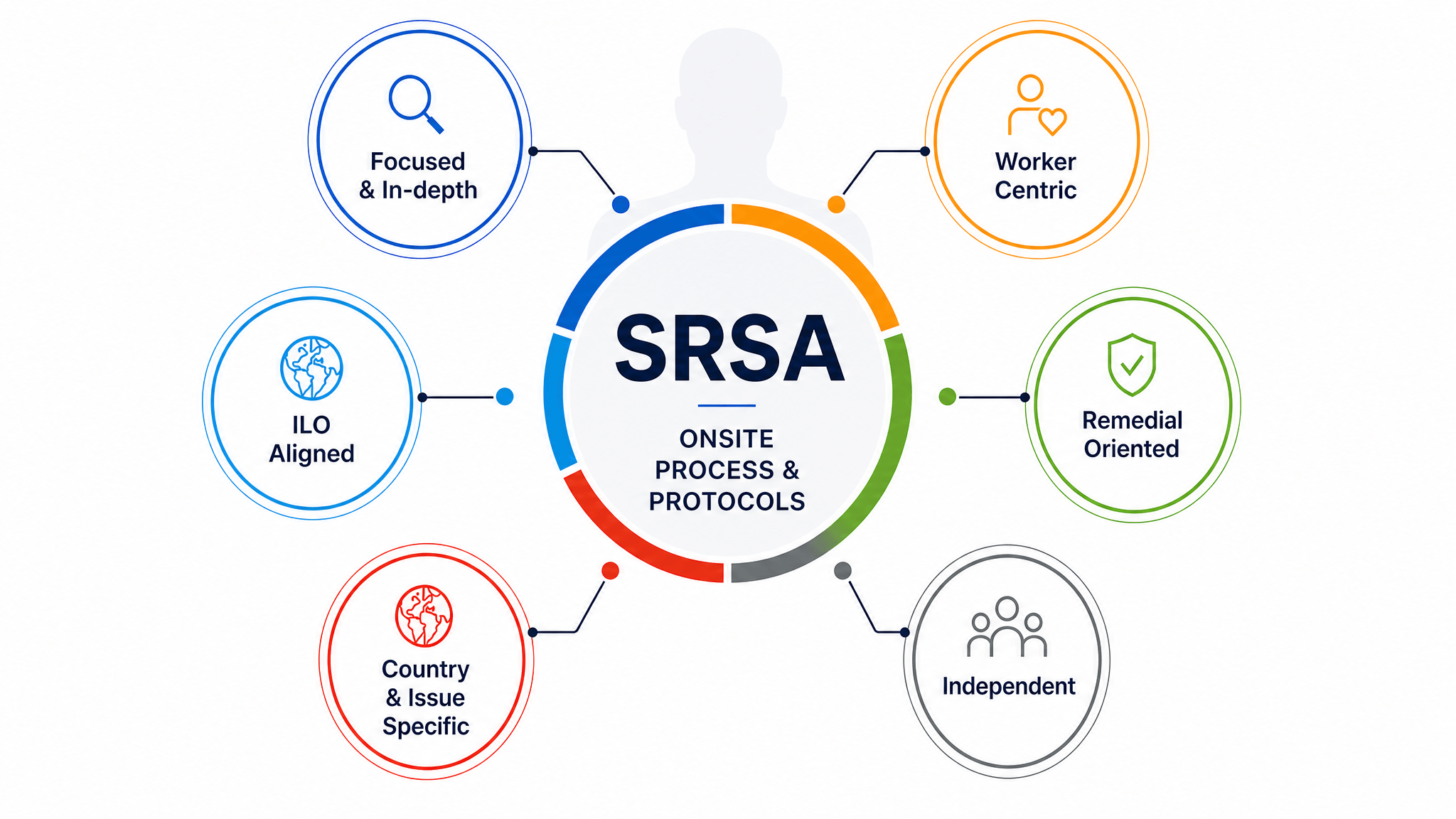
The SRSA model is brand-directed and independent. We do not market audits or outcomes to factories or operate from a supplier-driven commercial model, helping reduce conflicts of interest and strengthen confidence in findings.
Which salient risks are covered?
Rather than treating all issues equally, SRSA prioritizes the areas most associated with serious harm and regulatory scrutiny, including forced labor, migrant worker abuse, wage and hour violations, harassment, freedom of association concerns, health and safety risks, and weak management systems that enable recurring non-compliance.
What does an investigative approach mean exactly?
SRSA assessors are trained to go beyond checklist verification or a one-size-fits-all process. Our methodology allows for deeper inquiry when red flags emerge through interviews, document review, observations, or worker feedback, helping surface issues that conventional audit formats often miss.
What’s worker-centered evidence gathering?
Many workers have lost faith in social audits because they have not led to tangible changes that they can see and feel. While our assessment draw on multiple sources of evidence, we emphasize worker confidentiality, worker-management dialogue and, where appropriate, technology-enabled “worker voice“. We also understand and value the importance of non-triangulated worker provided intelligence, process feedback, and worker-driven solutions.
What is non-triangulated Intelligence and why does that matter?
Many serious labor issues are difficult to fully prove during a short site visit. SRSA’s methodology creates room to document credible concerns, indicators, and qualitative findings that warrant follow-up, even where full triangulation is not yet possible. This gives brands better visibility into emerging risk and supports more meaningful next steps.
Who are Mosaic’s assessors?
Mosaic works with assessors that demonstrate maturity, experience, integrity, and shared purpose. In support of this SRSA is differentiated as an independent model that incentivizes assessor and firm competence.
What standards and protocols do you use?
Similar to the ILO Betterwork program, SRSA assessments are undertaken against core international labor standards, applicable local law, and best practice where local law is weak. In addition, we use a modified version of the ILO Betterwork’s multi-stakeholder developed Compliance Assessment Tool (CAT) and enhanced onsite protocols.
What is the real value to brands in taking this approach?
SRSA provides a clearer view risk conditions, earlier identification of emerging risks, and a stronger foundation for targeted, worker-centered remediation, supplier improvement, buyer-supplier partnership, and program defensibility –everything regulators and civil society is asking for.
What countries will you offer SRSA?
USA, Mexico, C. America, Brazil, Turkey, China, Vietnam, Malaysia, Thailand, Cambodia, India, Bangladesh, Sri Lanka, Pakistan.